
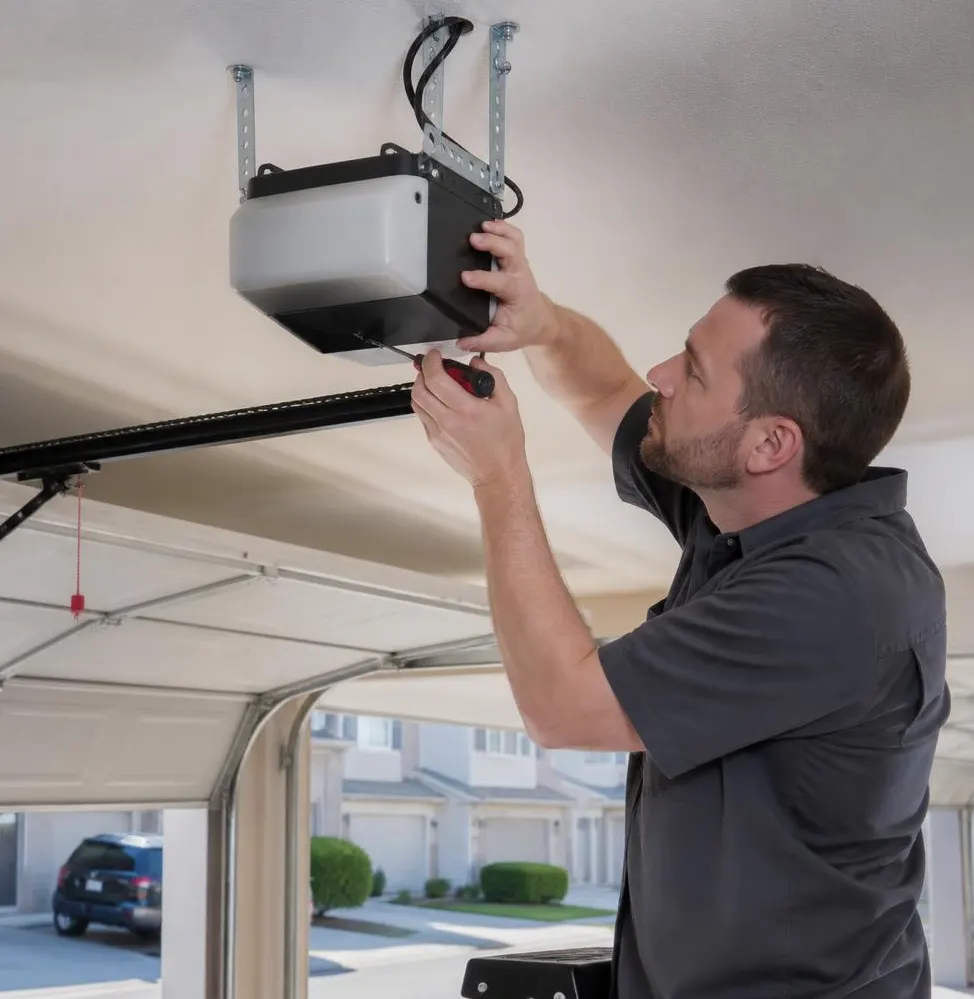
The Moment You Notice It
You hit the opener button on a sub-zero morning, and the door either doesn't move at all or groans like it's fighting you. Maybe it lifts an inch, shudders, and stalls. Maybe the opener motor runs but the door just sits there. Or maybe it does open, but slower than you've ever seen it move, with a loud crack or pop right at the start. In Cottage Grove, where winter mornings regularly dip well below freezing and overnight moisture has plenty of chances to refreeze, this is one of the most common calls garage door techs get between November and March.
The Symptoms Worth Paying Attention To
- Door won't move at all, opener is silent — often electrical or a dead remote battery, but check the obvious first.
- Opener motor runs, door doesn't budge — the door is physically stuck, not disconnected.
- Door opens but much slower than normal — something is adding resistance along the track or at the springs.
- Loud bang or crack right as the door starts moving — usually an ice seal breaking free, or a spring under altered tension.
- Door opens partway, then reverses or stops — could be a safety sensor issue or an obstruction the opener is reading as resistance.
Note which of these matches what happened in your garage. It tells a technician where to start looking, and it can help you narrow things down yourself before you ever pick up the phone.
What a Technician Checks, in Order
1. Ice Sealing the Door to the Floor
This is the first thing any experienced tech rules out, because it's the most common and the easiest to fix. Snowmelt or condensation runs under the door, then refreezes overnight, gluing the rubber bottom seal to the concrete. The door isn't broken — it's frozen in place. The fix is simple: never force the opener repeatedly, since that strains the motor and track. Instead, use a hair dryer or heat gun along the seal line, or gently work a flat tool between the seal and the floor to break the ice without tearing the rubber.
2. Thickened Lubricant and Stiff Rollers
Standard grease and old lubricant stiffen up in deep cold, which makes rollers drag in the track and hinges resist movement. This shows up as a door that moves, but slowly and with extra opener strain. The fix is cleaning old grease off the tracks and rollers and replacing it with a lubricant rated for cold temperatures, applied to hinges, rollers, and the torsion shaft bearings. This is routine maintenance, not a repair, and it's one of the cheapest ways to prevent winter callouts altogether.
3. Spring Tension Shifting With the Cold
Steel torsion springs contract slightly in extreme cold, which can change how much force they deliver to lift the door. Combined with a door that's heavier than usual from accumulated snow or ice, this is often what causes that loud bang or crack at the start of a lift — the spring is working harder than it's set up for. A technician checks spring tension and condition here, because a spring that's already worn or undersized for the door will fail under this added winter load. If it's stretched, cracked, or clearly fatigued, replacement is the only real fix; adjusting tension on a failing spring is a temporary patch at best.
4. Opener Mechanics and Chain or Belt Drive
If the door still won't move freely after the above, the opener itself gets checked next — the drive chain or belt, the trolley, and the motor's force settings. Cold can make a chain-drive opener's own lubrication stiffen, and a force setting that was fine in summer can be too weak to push through added winter resistance. This is adjusted or the drive mechanism is re-lubricated with a cold-weather product.
5. Sensors and Electrical Connections
Last on the list, because it's the least common cause but still worth ruling out: frost or condensation on the safety sensor lenses near the floor can cause the door to stop or reverse unexpectedly. A quick wipe-down of both sensors, and a check that they're still aligned, usually resolves this.
Why This Matters More in a Cottage Grove Garage
Between hard freezes, road salt tracked in on tires, and the mud and refreeze cycle of spring thaw, garage doors here go through more stress in a single winter than in several mild seasons combined. A door that's sluggish in December often turns into a spring that snaps or a track that bends by February if the underlying cause isn't addressed.
When to Call Cottage Grove Garage Door
If you've cleared an ice seal but the door is still slow or straining, or if you hear a crack and aren't sure whether it's just ice breaking free or a spring giving way, that's the point to call us rather than keep testing it yourself. We offer Garage Door Maintenance to get your rollers, tracks, and opener set up for cold-weather performance before the next freeze, and Spring Replacement when tension or wear is the real issue. If your door is stuck solid and you need it working now, our Emergency Garage Door Service covers that too.
Give Cottage Grove Garage Door a call before a frozen or sluggish door turns into a bigger repair this winter.