
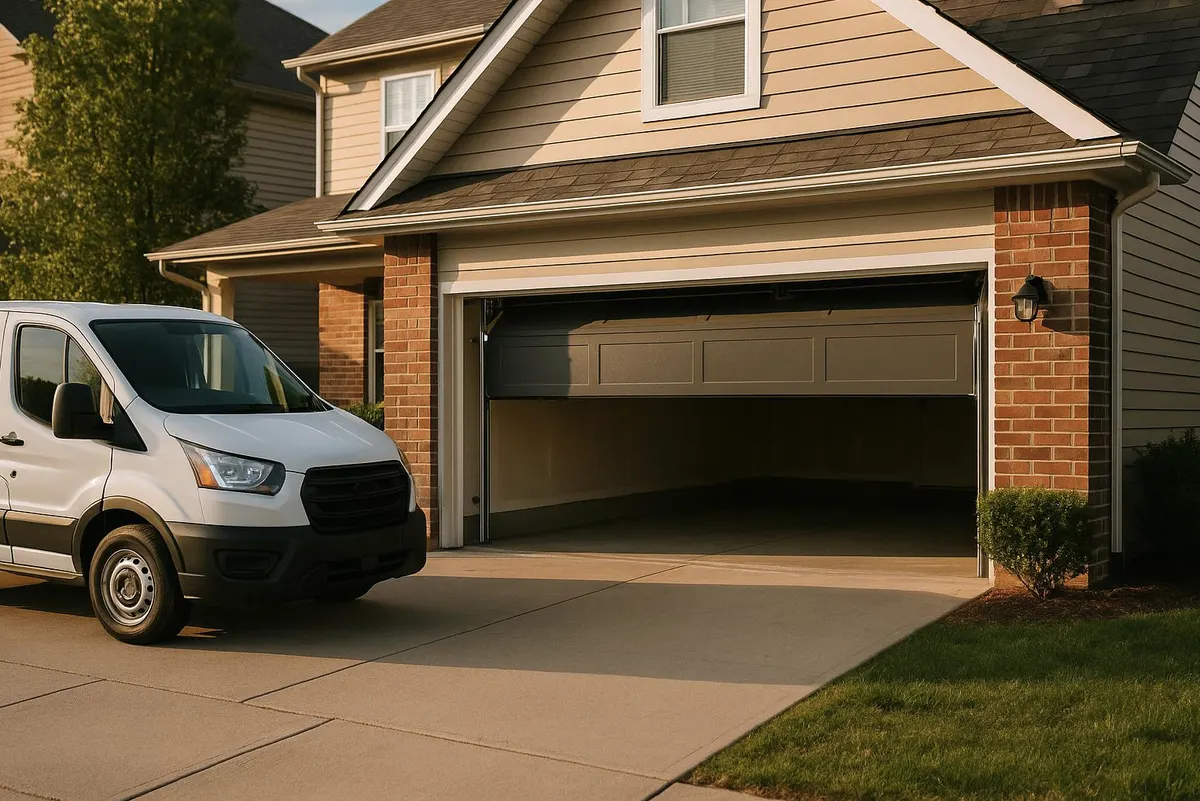
The Mistake: Judging Balance By Watching the Opener
Most homeowners check their garage door's balance the same way: they stand back, hit the button, and watch the door glide up and down. If it looks smooth and doesn't groan too loudly, they assume everything is fine. It's an understandable assumption—it's quick, it requires no tools, and the door genuinely does look okay.
The problem is that a garage door opener, especially a chain or belt-drive unit with real horsepower, is strong enough to mask a poorly balanced door. The motor simply works harder and pulls the door through whatever resistance the springs aren't handling correctly. You don't see the strain because the opener is absorbing it for you. The only way to find out if a door is actually balanced is to take the opener out of the equation entirely.
Why This Matters More Than It Seems
A balanced garage door is one where the springs are doing almost all the lifting work, not the opener. When springs are worn, improperly tensioned, or simply old, the opener's motor and gears pick up the slack. Over months of use, that extra load shows up as a motor running hotter than it should, gears wearing down faster, a trolley or belt stretching prematurely, or an opener that simply fails years before it should have. It can also throw off the opener's force settings, which can cause the safety reversal system to behave inconsistently—reversing when it shouldn't, or failing to reverse when it should.
In this part of Wisconsin, there's an added wrinkle. Cold winter temperatures change how spring steel behaves, and a door that was borderline balanced in September can feel noticeably different once temperatures drop into the teens and single digits. Snow load adds weight to the door itself, ice can stiffen hinges and rollers, and road salt tracked in from driveways accelerates corrosion on cables and pulleys over a winter season. Testing balance now, before the hard cold sets in, gives you a chance to catch a developing problem while it's still an easy fix.
Tools You'll Need
- A step stool (only if you can't comfortably reach the door's manual release handle)
- Work gloves
- A flashlight
- A notepad or your phone, to jot down what you observe at each height
You don't need any specialty tools for the basic test—just a clear view of the door and a few minutes when the door isn't in use.
How to Test Garage Door Balance, Step by Step
- Close the door completely. Start from a fully closed position so you have a consistent baseline.
- Disconnect the opener. Find the manual release cord, usually a red handle hanging from the trolley on the ceiling-mounted rail, and pull it straight down. You should hear or feel the trolley disengage from the opener arm. This step is essential—skipping it is exactly what leads people to the mistake described above.
- Lift the door by hand to about waist height. Use both hands and lift slowly and steadily, not with a jerking motion.
- Let go and watch what happens. A properly balanced door will stay roughly in place, or drift down very slowly on its own. A door that's out of balance will either drop quickly toward the floor or shoot upward on its own—both are signs the spring tension doesn't match the door's weight.
- Repeat the test at a second height, around shoulder height or higher. Balance can differ depending on where the door is along its track, so testing at two points gives you a more complete picture.
- Write down what you observed at each height—stays put, drifts slowly, drops fast, or rises on its own. This information is useful even if you end up calling a technician, since it helps narrow down which springs or components need attention.
- Reconnect the opener by pulling the release handle again (or following your opener's specific reconnect procedure) and running the door through a full open-close cycle to confirm the trolley has re-engaged properly.
What a Homeowner Can Safely Do
The balance test itself is safe for a homeowner to perform, along with a basic visual inspection while the door is open: look for visibly rusted or gapped coils on the springs, frayed or uneven cables near the bottom brackets, and rollers that look worn or cracked. These are things you can see and note without touching anything under tension.
What Needs a Technician
Adjusting spring tension, replacing a spring, or realigning cables and pulleys is not a homeowner task. Garage door springs are wound under extreme tension specifically to lift a door that can weigh well over a hundred pounds, and an improperly released spring can cause serious injury. If your balance test showed the door dropping fast, rising on its own, or behaving differently than it did a few months ago, that's a sign the spring tension needs professional adjustment—not a DIY fix.
When to Call Cottage Grove Garage Door
If your test revealed an imbalance, or if you noticed visible wear on the springs or cables, it's worth having it looked at before winter rather than after a cold snap makes things worse. Cottage Grove Garage Door can perform a full spring replacement if your springs are worn or mismatched to the door's weight, and can handle garage door opener service if the motor has been straining against an unbalanced door for a while—checking the gears, force settings, and overall wear before a small issue turns into a full opener replacement. We'll also walk you through what we find in plain terms, so you know exactly what's being fixed and why.
If your garage door isn't behaving the way it should, or it's just been a while since anyone checked it, give Cottage Grove Garage Door a call. We serve homes throughout Cottage Grove, WI and the surrounding area, and we're happy to take a look before winter settles in for good.